Unleashing the Power of Words: Elevating Your Arabic Translation Process

Unleashing the Power of Words: Elevating Your Arabic Translation Process

Unleashing the Power of Words: Elevating Your Arabic Translation Process

Welcome to the enchanting world of Arabic translation, where language and culture intertwine to create breathtaking linguistic masterpieces. As translators, we have the extraordinary privilege of bridging gaps and connecting diverse audiences through the magic of words. However, we understand that even the most seasoned translators face challenges when crafting their art. Overcoming hurdles such as getting started, eliminating superfluous content, and delivering a polished draft can be a thrilling adventure.

Fear not, dear language enthusiasts! We are here to shed light on the path to revolutionize your Arabic translation process and captivate your target audience:

1. Illuminating the Way: Begin with a Vision. Before embarking on your translation journey, take a moment to envision the destination. What do you seek to accomplish with your Arabic translation rendering? Are you aiming to educate, inspire action as in transcreation, or provide accurate information as in legal translation for example? By defining your goals, you can chart a course that leads to a translation masterpiece.


2. Embracing the Arabic Audience: A Tapestry of Diversity. Now, let us immerse ourselves in the vibrant world of your Arabic-speaking audience. Who are they? What knowledge do they crave? What are their unique concerns and aspirations? By intimately understanding your audience, you can tailor your translation to resonate deeply with their hearts and minds.


3. The Elegance of Simplicity: Harmonizing with Your Readers. When weaving your Arabic translation, embrace the power of simplicity. Choose words and expressions that gracefully dance with your audience’s comprehension. Steer clear of jargon and technical terms, unless your readers are well-versed in the intricacies of the subject matter; like in the legal and/or medical niche.


4. Polishing Your Gem: The Art of Meticulous Proofreading. Before unveiling your Arabic translation gem, embark on the noble quest of proofreading. Uncover any linguistic imperfections, vanquish grammar gremlins, and banish spelling specters. A flawless translation, free from errors, will showcase your dedication to excellence and resonate profoundly with your Arabic-speaking audience.


If you talk to a man in a language he understands, that goes to his head. If you talk to him in his language, that goes to his heart. Nelson Mandela


By embracing these illuminating tips, you will unlock the true potential of your Arabic translation skills, crafting captivating works that shine with clarity, eloquence, and cultural sensitivity.

But wait, there’s more! Here are some additional insights tailored specifically for our Arabic translation maestros:

  • Embrace Arabic Language and Culture: Immerse yourself in the rich tapestry of Arabic language, grammar, syntax, and cultural nuances. By embracing the essence of the Arabic world, you will bring authenticity and resonance to your translations.
  • Understand the Arabic Context: Familiarize yourself with the subject matter, its historical background, and its cultural significance. This will empower you to select the perfect words and idioms that truly capture the essence of your intended message.
  • Patience is a Virtue: Remember, the art of Arabic translation takes time and effort. Do not expect to achieve linguistic perfection overnight. Cultivate patience, refine your craft, and embrace the journey of continuous improvement.
  • Seek Wisdom from Others: Once you have crafted your Arabic translation, seek the insights of fellow language enthusiasts. Their feedback will provide valuable perspectives, helping you identify areas for improvement and ensuring the utmost quality in your final work; if applicable taking into consideration any signed non-disclosure agreements!Β 

So, dear translators, with these radiant tips in hand, embark on your Arabic translation odyssey. Unleash your creativity, sensitivity, and linguistic finesse to captivate your Arabic-speaking audience and leave an indelible mark in the world of translation. The stage is set, and the time is now. Let your words illuminate and inspire.


To be continued,

Stay Safe πŸ™‚Β 

Shaimaa Riad

AI & NMT in Arabic L10n: an Asset or an Enemy?! You Decide :):

AI & NMT in Arabic L10n: an Asset or an Enemy?! You Decide :):

This week I enjoyed being a listener to various rooms on Clubhouse! And here you are my Clubhouse L10n Insights of the week!

I enjoyed attending a lot of L10n rooms where they all tackled a lot of important topics related to culture & how AI is affecting us nowadays!

  • Platform Economics, Rapid Scaling, and Localization
  • Localization Explained
  • The Worldly Marketer Chat
  • Language, Culture, and Growth
  • Localisation talks – PoPo

And in the same week, Slator reported interestingly that: “a court in Poland has set a precedent of sorts by weighing in on the use of free machine translation (MT) tools such as Google Translate?” read the full story.

All this reminds me of howΒ I have been contacted by one of my regular clients to revise a legal task intended to be read by prosecutors for The Global Counterterrorism Forum (GCTF). After accepting the task I spotted the bad karma of Machine Translation. Later on,Β I contacted my client and settled the matter in order to avoid dealing with such “Machine Translators” again & started my re-translation process from scratch and charged more – YAY!
I was frustrated that the quality of the translation provided is not correctly rendered and is just a waste of my client’s time & money!
For example, the word (foreword) in the task is translated as if the writer is sayingΒ moving ahead though it is a forward at the beginning of the book! Even the legal phrase ’adequate remedy’ is treated as if the source text is referring to some sort of medical treatment!

All of which correlates with an interview hosted by Andrew Morris & Tanya QuintieriΒ having Henry LΓ­uΒ talking about “The Future of our Profession and The Industry”Β –Β Translation Mastermind Summit 2020Β  during which he shed light on the changes happening in our profession, reshapings, market demands, and transformation!


He also expressed how it is “ridiculous” some clients are requesting to lower the rates of PEMT (Post Editing) tasks as long as they need to humanise an MT to reach the perfect outcome i.e. we are fixing a problem with your tool so reasonably we should charge more!Β 
Translation & even Localisation is an act of translating the meaning behind the words in a way that echoes the idea; it is not an act of using the same words in a different language, a localiser/ translator has to take into consideration the niche & jargon he/she is localising/ translating into!
This level will never be attained by a machine! AI is aiming at outdoing some human cognitive functions, as announced by various AI scientists and engineers around the globe, but what about ecology?!
Isn’t translation/ localisation a process that is addressing humans with all their self-conscious emotions that differentiate us from bots & robots?
And I think there is a huge gap between Artificial Intelligence & Emotional/ Human Intelligence and that’s the question!

Machines can’t translate the various degrees of emotions! Initial positive & negative connotations of some words according to a particular context/culture can’t be fully understood by a machine!


”Technology is changing the way we interact as humans.” β€” Dan Brown

And that what we have to talk about. It’s not about the replacement of a translator/ linguist, it’s about how we will do the actual work we are doing nowadays!


In their book, Humility Is the New Smart: Your job is at riskβ€”if not now, then soon”Β Edward D. Hess & Katherine Ludwig are exploring “how human beings can excel at the skills that smart machines and smart robots will not be able to do well in the next few decades, which is totally related!

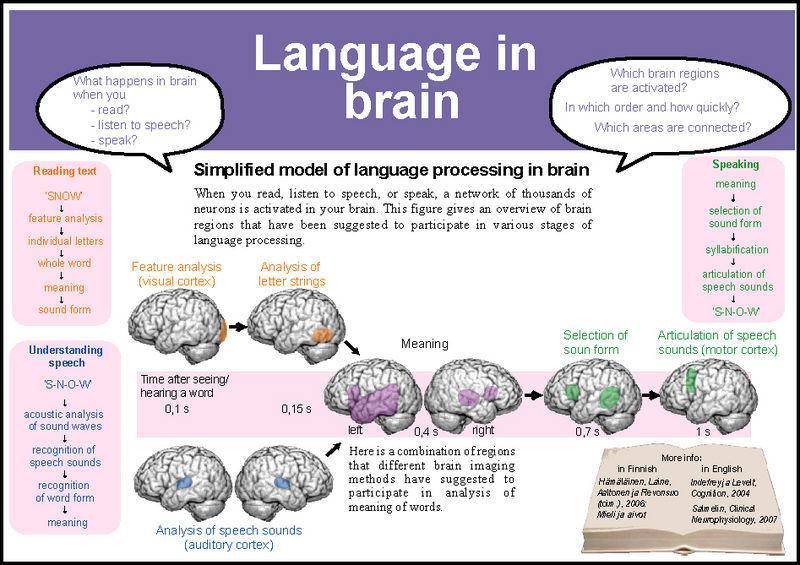
For me, translation is a scientific artΒ & a sophisticated process performed by the most complex organ in the human body – the human brain!


However, this doesn’t mean that neglecting MT in our translation/ localisation community is the right decision!

We have to do research work from time to time to be updated with its progress in order to be able to cope with it and defend our work to know how to make use of it and reap its benefits!
Yes, we humansΒ run after easy solutions but without the human touch, AI tools will end up overpromising & underdelivering in terms of the quality of the localised Products!
Change is a crucial topic especially for linguists; thanks to the technology that is undoubtedly affecting our working routine concurrently! We have to deal with the relentless changes heading on!
Do you remember how we used to check paper dictionaries? Handwriting translations? The first time we heard about CAT tools? Even COVID-19 and the fact that we are living digitally out of a sudden?

We have to study the tech-savvy tools and make use of the available technologies. That’s why I have taken theΒ MTPEΒ certification by SDL, notwithstanding my beliefs because weΒ must have the courage to read the trends hovering around to be able to reap its benefits if any!


It covers the techniques and skills involved in MTPE:

  • Β Rules-based Machine Translation (RBMT);
  • Β Statistical Machine Translation (SMT);
  • Β Neural Machine Translation (NMT);
  • Different MT solutions:Β Generic & Customizable engines;
  • Differenct levels of post-editing: light post-editing, full PE vs Over-editing, etc!


And I came to the conclusion that:Β Neural MTPEΒ is an asset to human linguists & not a replacement!Β β€œTranslation & Culture Matter” – AI will hardly be able to imitate culture! And according to some studies, 75-80% of prosumers around the world prefer to buy what reflects their own cultural identity.

As an Arabic Linguist, I assure you that transarabizing your content via an online translation service does not usually yield the results you are looking for when your business is operating seriously on an international & Arabized level.
Natives can spot a pretender from a mile away e.g. the famous translation mistake of IKEA Bahrain. Arabization plays a crucial role in treating your content as a living organism on an Arabized level, it is more than just switching from a certain language into a cut-and-dry Arabic copy!
Offering culturally sensitive translations is very important in our Arabic translation business!
Do you know a single word can be interpreted differently from an Arabic country to another and may hold both +ve & -ve connotations at a time before your ICA according to his place of residence/ culture?
Even emojis!! People interpret the same “emoji” in completely different ways according to their culture!
For example, πŸ™Œ a symbol of celebration or excitement! But in Egypt, we may use it as a hand gesture to ward off the evil eye!
So, we are not only localising ArabicΒ in form and style, but also adapting the related customs, manners, and mentality, which will never be done by machines!
Agree?


What is L10n & How to Convince Outsiders of its Importance?

What is L10n & How to Convince Outsiders of its Importance?

Three days ago, Liz Dunn MarsiΒ & Tucker JohnsonΒ hosted an insightful discussion on Clubhouse, the new promising live podcasting app, about “The Intersection of Language, Culture & Growth” where they shed light on what goes into launching products globally! The room hosted a lot of well-known localisation/ translation figures:Β Marina Gracen-Farrell, Michael J. Asquith, Rodrigo CristinaΒ & Gabriela KouahlaΒ & of course me!


I enjoyed listening to all the insights and came to the conclusion that:


If you find a game, an app, a product, a book, or even a certain service speaking your mind and reflecting your cultural identity/ passion in a way that reaches you then the localisation mission is accomplished! And that’s why localisation/ translation is important; it is a living organism that accompanies you 24/7 invisibly through us translators & localisers!


One of the common myths about localisers & linguists that they just replace a word in a source text with another equivalent in a target language!


However, hiring a professional localiser means echoing the tone, meaning, style, and lexicons to reach you, your ICA, or your targeted culture i.e. speaking your tone & writing your way + offering culturally sensitive renderings!


In many contexts, we translators/ localisers have the green light to use different lexicons and sentence structures that make sense before your target reader while adding our secret sauce to make your text read like your OWN original notwithstanding the specialisation!


In a nutshell:

A translator/ localiser is a disguised writer and researcher sometimes an engineer, who manuipulates your words like aΒ marionette!


Agree?

356 Social Media Content Ideas for Translators

356 Social Media Content Ideas for Translators

356 Social Media Content Ideas for Translators

WOO Your Client Avatar Now!

356 Social Media Content Ideas for Translators

What Translators and/or LSPs Say!

My word, you have just solved a huge problem and saved me hours and hours of work. This is a fabulous resource. πŸ˜ŠπŸ™πŸ½

ElΕΌbieta Dubois

Translator | Localization specialist | Content Writer | English & Spanish β†’ French & Polish

This is a work of love! I haven’t seen many resources addresses to translators/LSPs specifically. Thanks for sharing.

Sylwia Biczyk

Polish Business Translator

That’s a great source of inspiration.πŸ’‘ Thank you so much, Shaimaa!

Sabine Sapp

English to German Translator

I love it! Bravo & Thank you!

Gabriela Kouahla

English to French-Romanian Translator

Amazing work! Thank you so much! 😊

Nancy LΓ³pez VΓ‘squez

Traductora Jurada En <> Es Legal Sworn Translator

Honestly,Β this is like my content bible! Whenever I’m stuck for an idea I always flick through this and come up with something great.
Heidi Karino

Transcreation copywriter | Japanese to English | Making Japanese marketing and advertising copy work in English.

Thanks, Shaimaa, as you explain it, planning is key!

Valerie Le Deroff

Legal & business English to French translator

That’s a great source of inspiration.πŸ’‘ Thank you so much, Shaimaa!

Charlotte Marti

German & English into French Translator

Thank you for this amazing resource! πŸ€—

Riikka N

Content writing & Translation FI / EN / IT

Congratulations, Shaimaa! So beautifully edited and such great content! I can’t wait to start reading it and applying your tips to my different social media profiles πŸ˜„

Ismael Marin

English to Spanish translator and localization specialist

This is genius! πŸ‘ Thank you πŸ’–

Ilduara Escobedo

Freelance English <> Spanish Translator, Proofreader, and Localizer

Pop your Details Below for Instant Access!

Bloom Your Translation Business in 2021

Bloom Your Translation Business in 2021

Wanna Grow Your Translation Brand? Okay, Think Business πŸ€·πŸ»β€β™€οΈ

A lot of #LSPs keep struggling on how to stand out, sometimes they keep writing posts about translation in itself, sharing tips and tricks on how to translate this or that.πŸ˜•

Okay, that’s good but your Client Avatar wants to know you and your brand. Clients aren’t looking for a translation tip to be educated or else you are preparing your clients to do the work instead of you πŸ˜„

They want to see their problems solved through you and your services! πŸ™‹β€β™€οΈ

Investing in your business niche is the key!

“Build a brand in the front & develop business relationships in the back!” 🌞

Build your authentic personal prescribed image to stay ahead of the game!🀩

Read in Marketing, branding, SEO, WordPress, Design …etc Know your passion, follow these inspiring influencers over there, and think outside the translation-oriented box! πŸ“¦

More tips? Download them here!

Pin It on Pinterest